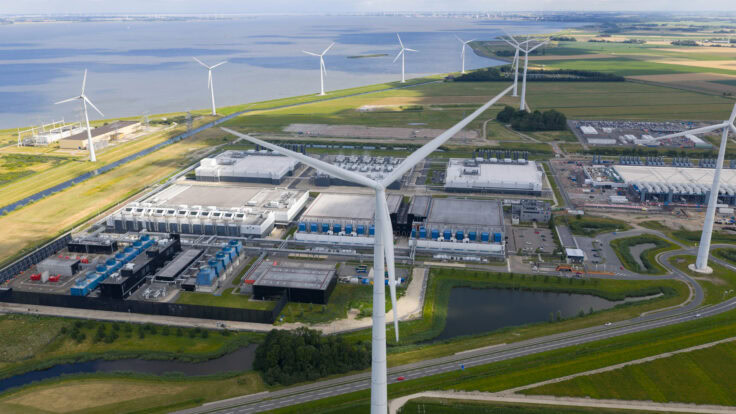
Who will build the power behind America’s AI data centre boom?



The race to build AI infrastructure is accelerating across the United States. New hyperscale data centres, power generation facilities, transmission upgrades and supporting infrastructure projects are being announced at an unprecedented pace. Billions of dollars are flowing into the sector as technology companies invest heavily to support the next generation of artificial intelligence. While discussions often focus on capital investment, energy demand and technology, there is another challenge emerging behind the scenes: workforce availability.
The scale of investment entering the market is extraordinary. Major technology companies continue to commit significant capital towards data centres, cloud infrastructure and AI development. At the same time, utilities, developers and energy providers are expanding power generation, transmission and distribution networks to support growing electricity demand. The capital is available. The projects are being approved. The technology exists. The question is whether there are enough skilled people available to deliver it all.
Across Texas, Nevada, Arizona, Virginia and other key markets, developers are competing for many of the same workforce groups. Electricians, welders, fibre technicians, pipefitters, project controls professionals, commissioning engineers and construction management teams are increasingly in demand across multiple sectors simultaneously. Data centres are not only competing with other data centres. They are competing with power generation projects, transmission upgrades, semiconductor facilities, industrial developments and large-scale infrastructure programmes for the same talent pools. As project pipelines continue to expand, workforce availability is becoming a critical factor in maintaining schedules and controlling project risk.
Historically, project delays have often been linked to permitting challenges, supply chain constraints or equipment lead times. Today, labour availability is becoming an equally important consideration. Projects can have funding secured, equipment ordered and construction schedules approved, but without access to the right people at the right time, execution becomes increasingly difficult. The challenge is particularly evident in skilled trades and specialist construction disciplines where experience cannot be developed overnight.
The organisations that are successfully delivering large-scale projects are increasingly treating workforce strategy as an early-stage planning activity rather than a last-minute recruitment exercise. Understanding labour availability, mobilisation timelines and regional workforce pressures before construction begins can significantly reduce project risk. Companies that secure workforce solutions early often gain a competitive advantage when market demand intensifies.
At Atlas NextWave, we support data centre, energy and infrastructure developers across the United States with access to skilled trades, technical specialists and project personnel. Our teams support projects across the full lifecycle, helping clients secure the workforce needed to maintain schedules, support operational readiness and deliver critical infrastructure safely and efficiently. As America’s AI and digital infrastructure build-out continues, the projects that succeed will not simply be those with the best technology or the largest investment. They will be the projects that can secure the right people to deliver them.
Share this article