Why community engagement must start before data centre construction



The rapid expansion of artificial intelligence is creating demand for data centre capacity on an extraordinary scale. But the infrastructure challenge extends far beyond the data centre itself. Every new campus needs access to reliable power, and increasingly, developers are considering behind-the-meter generation, microgrids and hybrid energy systems to keep ambitious projects moving. The question is no longer only where the power will come from. It is who will build it.
In 2023, data centres accounted for approximately 4.4% of total US electricity consumption. The US Department of Energy projected that this could rise to between 6.7% and 12% by 2028 as data centre capacity and AI applications continue to expand. That growth is putting pressure on generation, transmission and grid connection capacity. Development schedules for AI infrastructure can move faster than traditional utility infrastructure, making access to power one of the most important considerations in site selection and project planning. Capital may be available and demand may be clear, but neither can accelerate a project that cannot secure sufficient power.
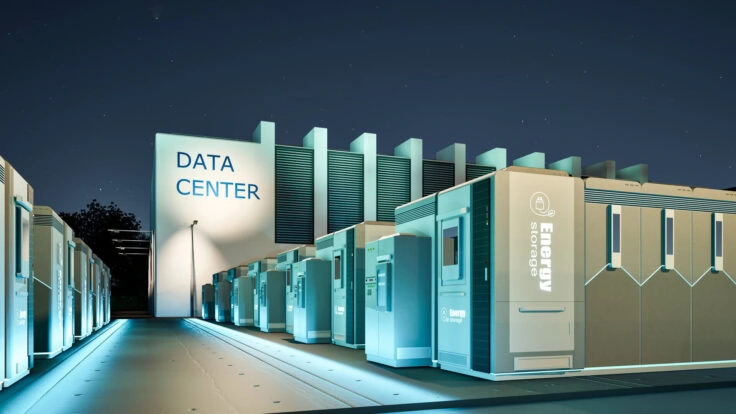
Traditional grid connections remain fundamental, but developers are also considering alternatives that provide greater control over availability and timing. Depending on the location and operating model, this can include behind-the-meter gas generation, renewable energy, battery storage, microgrids or combinations of several technologies. The US Department of Energy has recognised that grid constraints and lengthy connection timelines are driving interest in co-locating large electricity users with existing or refurbished generation. Behind-the-meter generation is not simply a matter of placing a power plant next to a data centre. It requires the integration of generation, electrical infrastructure, controls, fuel supply, storage, resilience and critical-load requirements. It also creates an entirely different workforce challenge.
For much of the previous decade, investment in major US thermal power projects was comparatively limited, while many experienced professionals moved into renewables, transferred into other industries or retired. Atlas NextWave is now seeing demand for conventional power-generation expertise return rapidly. Developers are competing for project leaders, electrical and mechanical engineers, controls specialists, commissioning professionals, construction managers, HSE experts and operations-readiness personnel with relevant experience.
As Atlas NextWave Business Director Terry Hodges recently put it: “Behind-the-meter generation is quickly becoming a major part of that conversation. The challenge? Finding the people to build it.” People with experience across both power generation and mission-critical infrastructure will be particularly valuable. Those networks cannot be created after construction has already begun.
Texas is emerging as one of the most important markets for power-first and behind-the-meter AI infrastructure. The scale of proposed development is placing unprecedented pressure on the state’s electricity system. In June 2026, ERCOT reported that it was tracking more than 438,000 MW of large-load connection requests, with data centres representing almost 89% of those requests. These are requests rather than guaranteed future demand, but they demonstrate the extraordinary level of activity entering the system.
For developers, this creates both opportunity and competition. Projects will be competing not only for power capacity and equipment, but also for the experienced people needed to plan, build, commission and operate new infrastructure. That makes workforce availability a strategic development question, not simply a recruitment task.
Data Centres is a newer vertical for Atlas NextWave, but the disciplines behind it are familiar territory. Our teams bring established permanent recruitment experience from the former NextWave business, alongside deep networks across conventional power generation, renewables, engineering, construction and infrastructure. This is reinforced by Atlas NextWave’s wider capabilities in contract recruitment, compliance, mobilisation and scalable workforce delivery. That combination allows us to support the complete data centre and power-infrastructure lifecycle, from development and leadership appointments to construction teams, commissioning specialists and long-term operations.
The strongest workforce strategies begin while projects are still being developed. Clients need a realistic view of talent availability, salary expectations, mobilisation timelines and competition in each location. They also need to identify which expertise can be sourced locally, which specialists may need to travel and where transferable experience can be brought in from adjacent industries. Waiting until every position becomes urgent reduces options and increases risk. Starting early allows organisations to map scarce skills, engage key professionals and build a workforce plan around the project schedule. The AI infrastructure race will not be won by technology and capital alone. It will be won by organisations capable of execution.
Planning a data centre or behind-the-meter power development in the United States? Talk to Atlas NextWave about the people required to turn your project into operating infrastructure.
Share this article