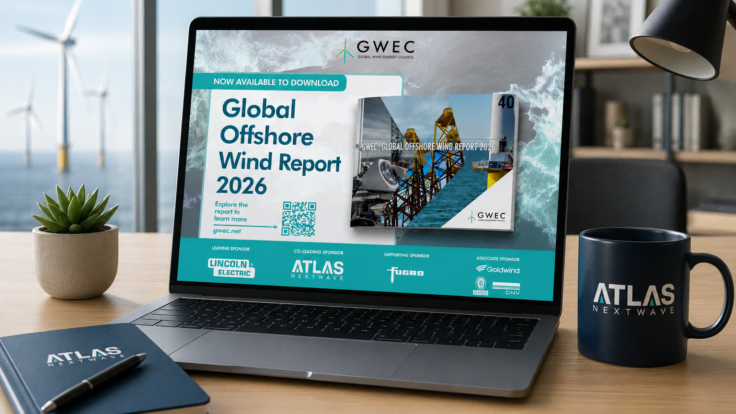
Atlas NextWave Contributes Foreword to GWEC Global Offshore Wind Report 2026


Asia-Pacific's offshore wind industry is entering a new phase of development. After years of rapid growth in Europe, countries including Taiwan, Japan, South Korea and Australia are investing heavily in offshore wind as part of their long-term energy transition strategies. While each market is developing at its own pace, they share a common challenge: building the skilled workforce required to deliver complex offshore projects safely, efficiently and at scale. For developers, contractors and supply chain partners, access to experienced offshore wind talent has become a critical success factor.
Europe remains the world’s most mature offshore wind market. Over the past decade, Atlas NextWave has supported more than 100 offshore wind farms and numerous offshore substations and converter platforms across the region. Working alongside developers, vessel operators, installation contractors, cable specialists and OEMs has provided valuable insight into the workforce challenges that accompany large-scale offshore wind deployment. From survey and geotechnical investigations to installation, commissioning and operations, workforce planning plays a vital role throughout the project lifecycle. The lessons learned across Europe’s offshore wind industry are increasingly relevant to emerging markets around the world.
Taiwan has established itself as one of Asia’s leading offshore wind markets. Through its local presence and specialist offshore wind teams, Atlas NextWave has supported multiple offshore wind projects across Taiwan, providing personnel across engineering, project management, construction, marine operations and offshore installation disciplines. As the market has matured, demand has evolved from project development and construction support towards long-term operations, maintenance and asset management capability. This evolution reflects the natural progression seen previously in European markets.
Japan and South Korea represent some of the most exciting long-term offshore wind opportunities in Asia-Pacific. While project pipelines continue to develop, both markets are investing heavily in local capability, supply chain readiness and workforce development. By combining regional market knowledge with global offshore wind expertise, Atlas NextWave supports clients in building project teams that balance local content requirements with international offshore wind experience. This approach helps accelerate knowledge transfer while supporting the long-term development of local workforces.
Australia is at an earlier stage of offshore wind development but has significant long-term potential. As new projects move through planning and development phases, workforce readiness is becoming an increasingly important topic for developers, contractors and government stakeholders. Drawing upon experience gained in Europe and Asia, Atlas NextWave is supporting discussions around workforce planning, capability development and offshore wind industry readiness as Australia’s first generation of offshore wind projects progresses towards execution.
Offshore wind projects are delivered locally, but the challenges faced by developers are often global. Whether supporting projects in Taiwan, Japan, South Korea or Australia, Atlas NextWave combines local market understanding with international offshore wind experience. With offices throughout Asia-Pacific and a track record spanning mature and emerging offshore wind markets, we help clients access the specialist talent required across the full offshore wind lifecycle.
Asia-Pacific is expected to play an increasingly important role in the future of offshore wind. As projects move from planning into construction and operations, workforce availability, skills development and knowledge transfer will become critical success factors. By applying experience gained across more than a decade of offshore wind delivery, Atlas NextWave continues to support the growth of sustainable offshore wind industries throughout the Asia-Pacific region.
Share this article