From Europe to Asia-Pacific: Applying Global Offshore Wind Expertise in Emerging Markets


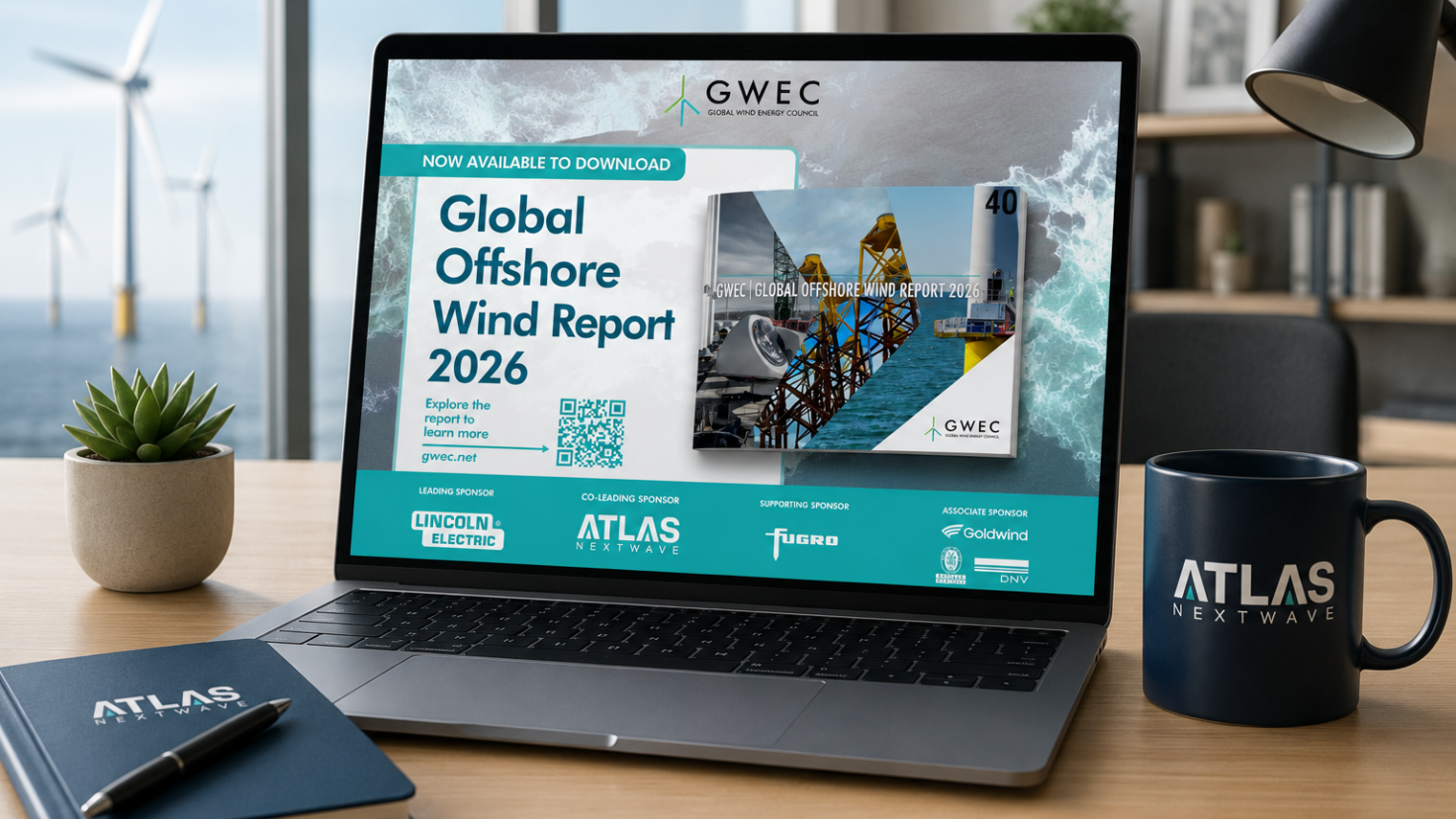
Atlas NextWave is proud to be a Co-Leading Sponsor of the Global Offshore Wind Report 2026, published by the Global Wind Energy Council (GWEC), one of the offshore wind industry's most influential annual publications. Bringing together market intelligence, policy recommendations and strategic insights from around the world, the report provides a comprehensive overview of the opportunities and challenges shaping the future of offshore wind. This year's edition also features a dedicated foreword from Atlas NextWave Chief Commercial Officer Matt Riding, reflecting the company's growing role in supporting offshore wind projects and workforce development globally.
Offshore wind continues to expand across Europe, Asia-Pacific and the Americas. Governments are increasing renewable energy ambitions, developers are progressing larger and more complex projects, and new markets are entering the sector for the first time. While much of the industry’s attention is focused on turbines, vessels, ports and supply chains, another challenge is becoming increasingly important: workforce readiness. In his foreword, Matt Riding highlights the growing need for long-term workforce planning as offshore wind scales globally. As demand for skilled personnel increases across multiple regions simultaneously, the ability to attract, develop and mobilise qualified professionals will become a critical factor in project success.
The Global Offshore Wind Report 2026 highlights continued long-term growth for the sector, while also recognising the challenges facing project developers and supply chains worldwide. As offshore wind expands into emerging markets, the industry must balance local workforce development with access to experienced international expertise. This requires closer collaboration between developers, contractors, governments, training providers and workforce partners to ensure projects have access to the skills they need at every stage of the lifecycle. Drawing on Atlas NextWave’s experience across offshore wind construction, installation, commissioning, operations and maintenance, Matt’s foreword explores how workforce strategies can support both established and emerging offshore wind markets.
Atlas NextWave has supported offshore wind projects across Europe, North America, Asia-Pacific and other emerging regions for more than a decade. From workforce planning and recruitment to compliance, payroll, mobilisation and training initiatives, the company works alongside developers, OEMs, EPC contractors, vessel operators and service providers to help deliver complex offshore wind projects safely and successfully. Today, Atlas NextWave’s offshore wind experience spans more than 100 offshore wind farms and multiple offshore substations and converter platforms, supporting projects throughout the full project lifecycle.
The energy transition is often discussed in terms of technology, infrastructure and investment. However, every offshore wind project ultimately depends on the availability of skilled people to design, build, install, operate and maintain critical assets. That is why workforce readiness remains a central theme throughout Atlas NextWave’s contribution to the report. As the offshore wind industry continues to evolve, developing the next generation of talent while ensuring access to experienced professionals will be essential to sustaining growth and delivering projects successfully. Atlas NextWave is proud to contribute to the conversation through its sponsorship of the GWEC Global Offshore Wind Report 2026 and through Matt Riding’s foreword, helping highlight the workforce challenges and opportunities that will shape the future of offshore wind worldwide.
Share this article